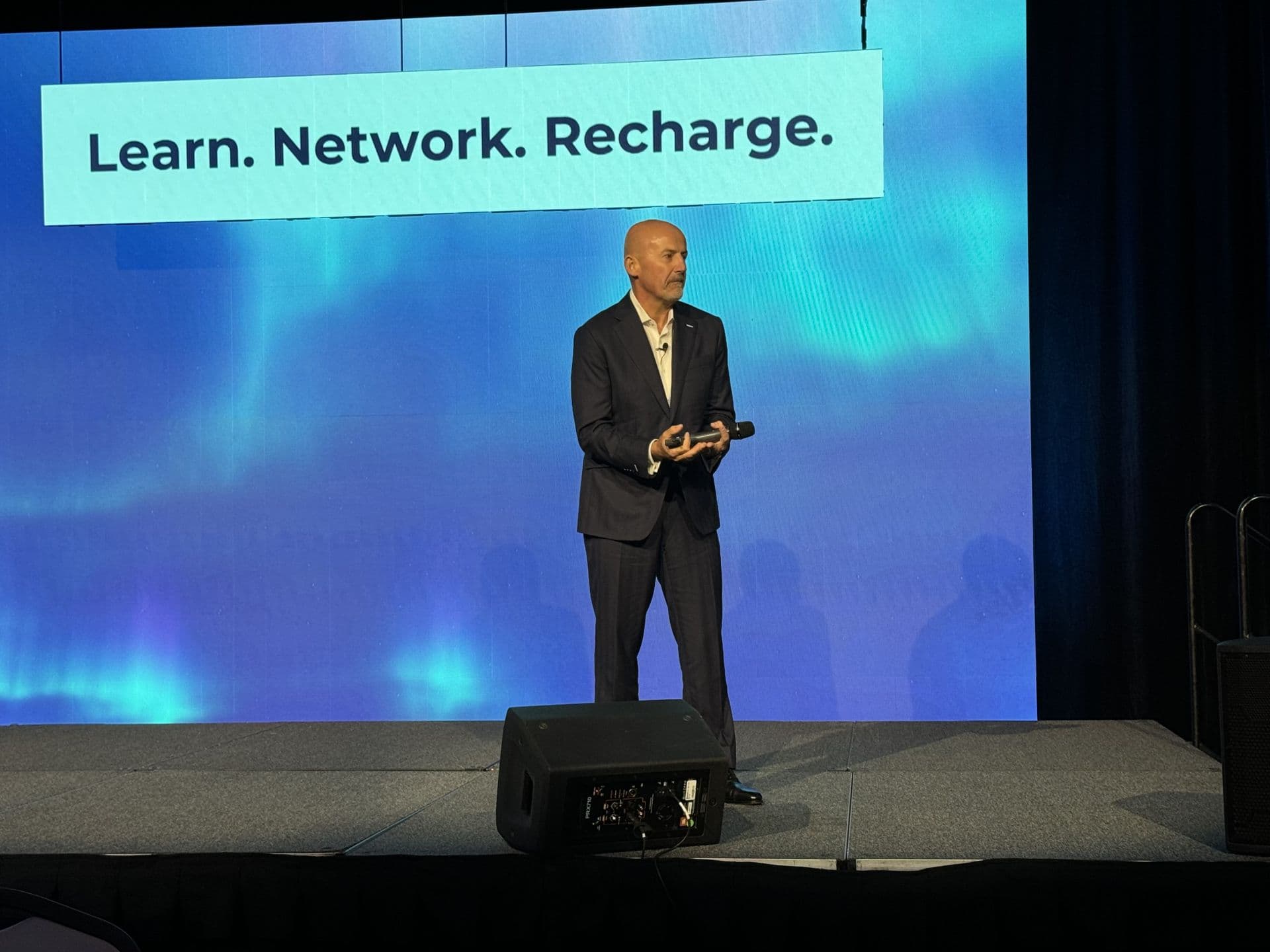
Observable change in how leaders execute.
These are not training outcomes. They are what changes when the behavioral engine is installed and governed weekly.
Leadership teams we have installed the system inside





Two trajectories from the same starting point
A training event and an installed system look identical on day one. The difference shows up over the first 90 days - one decays, one compounds.
Leaders Installed
Organizations
Client Retention
Avg Net Income Increase
Years of Application
Every organization on this page had capable leaders. What they didn't have was a system that held under pressure.
Without installed behavioral governance, tolerance quietly becomes the standard. Small misses compound into turnover, margin erosion, and a leader who can never leave the room. That is the cost of drift - and it is invisible until someone measures it.

Case examples, by type
Anonymized by organization type. Start state, what was installed, and the current outcome.
+21%
Revenue
No Accountability. No Winning. Now Both.
Start
This home services organization had grown to a size where the founder's direct involvement in every decision was no longer sustainable - and was becoming the ceiling. There was no defined definition of winning. Leaders measured activity, not outcomes. Accountability conversations happened reactively, after problems, not proactively as governance. Quality issues and callbacks were accepted as normal. The cost of that tolerance - in rework, in customer relationship damage, in margin erosion - was invisible because nobody was measuring it. The organization was profitable enough to mask the dysfunction. But the founder knew: the next stage of growth required a leadership layer that could govern without him. That layer did not exist.
Installed
Primary Score and Guardrail - winning defined at every level. Each leader could state the one result they owned and the one boundary that protected how it was achieved.
All Outcomes
“We thought our problem was growth. It was actually governance. We were growing through problems we were tolerating, not solving. Once we installed the system, the numbers followed.”
CEO · Home Services Organization
42% → 18% in 12 months
Voluntary turnover
Low Trust. No Recovery. Installed Both.
Start
The leadership team at this community bank had the credentials and the commitment. What they didn't have was trust - not as a value, as a practiced behavior. Decisions got made in silos. Problems surfaced late. Leaders worked around each other instead of with each other. There was no definition of winning at the leadership level. Without a shared score, there was no shared standard. And without a shared standard, every accountability conversation felt like a personal attack rather than governance. The result: leaders avoided hard conversations entirely. Expenses drifted. Performance issues went unaddressed. The bank was stable but stagnant - not because the people lacked capability, but because there was no system requiring them to use it.
Installed
Winning clarity - Primary Score and Guardrail defined at the leadership level. Every leader could state the one result they owned.
All Outcomes
“We had talented people who genuinely liked each other. What we were missing was a shared operating system. Once that was installed, the trust followed - because it was built into how we worked, not just how we felt.”
President · Regional Community Bank
Complete - CEO succession infrastructure installed and documented
Succession planning
Authoritarian CEO. No Succession. Installed Both.
Start
The CEO of this aerospace manufacturer built the company through force of will. The organization had no ability to function at a high standard without him. Goals existed informally, in his head. Accountability was personal - to him, not to a system. There was no succession plan - not because succession hadn't been discussed, but because there was no system capable of running without him to hand off to. You cannot hand governance to an organization that doesn't have governance infrastructure. The previous leadership development programs had failed because they tried to develop individual leaders without installing an operating system. Individual skill improvement doesn't matter if the system still depends on the CEO for every decision.
Installed
The 6-Step Performance Engine across the full leadership layer - Winning, Identity, Behavior, Tolerance, Standards, Performance defined at every level.
All Outcomes
“I built this company by driving everything. I thought that was leadership. What I learned is that it was the ceiling. The install didn't change the company - it changed what the company could become without needing me to carry it.”
CEO · Privately Held Aerospace Manufacturer
From leaders who installed the system
Steve and the LLI team helped us actually follow our own documented processes. It's not about the procedure, it's about the behavior that follows it. Once we nailed it, the private equity firm bought us with a multiple we never thought possible.
CEO
Custom Metal Fabrication Company
We didn't want to hear most of what Steve told us about our company after the Drift Audit. At the same time, GDD helped us address each issue in a practical way. Once we made it part of our DNA, our results increased by more than 26% in 12 months.
CEO
Professional Services Organization
The team at LLI showed us that our view of accountability was clearly wrong. We went from a company with a few heroes to a team that works together with a clear objective and clear guardrails - we have almost no heroes and the team is a real team. I didn't realize the importance of recovery and governance.
Chief Operating Officer
Midwest Apparel Organization
Their ability to connect leadership principles to real-world teamwork resonated with every level of our organization. Our employees left with practical tools they can apply immediately, and the positive impact extended well beyond the session.
Ray Biggs
President and CEO · West Shore Bank
Using Steve's approach enabled our management team to break down complex topics of communication, trust and accountability, and find more wins with our team members and clients.
Josh Eling
President & CEO · Huron Community Bank
Emerging Leaders Academy - in their own words
Historical participants from the DEC Emerging Leaders Academy describe what changed in how they lead. The academy name is retained here as the identity of the original testimonial.
Captions can be turned on with the CC control in the player. You can also watch on Vimeo.
From the DEC Emerging Leaders Academy
Historical participant reflections from the DEC Emerging Leaders Academy. The current DEC GDD Foundations offer is a separate six-session installation.
“What made this approach unique was the operating system. It provides structure, feedback, and practical takeaways you can use in your everyday work.”
Carl Rivera
Relationship Manager, Comerica Bank
“The biggest change for me was understanding the difference between driving people and guiding them.”
Ebonee Patterson-Martin
Senior Compensation and Performance Analyst, Dakkota Integrated Systems
“I realized that treating every person the same was not always the most effective way to lead.”
Michael Mannina
Assistant Clinical Manager, Henry Ford Health
“It taught me to think differently about leadership and how to apply those ideas in my day-to-day work.”
Dr. Issra Mehdi
Senior Strategist, DTE Energy
“The leadership operating system is a repeatable model for how to manage and lead a team.”
Zac Sepanik
General Manager, NBS Commercial Interiors
What actually changes
Behavior-based outcomes you can observe in daily operations.
Managers coach instead of fix
Problems get developed, not rescued. Teams build capability instead of dependency.
Leaders reinforce instead of remind
Expectations get embedded through practice. The same conversation doesn't happen twice.
Expectations show up in real work
Standards translate into observable behavior. Culture becomes visible in daily operations.
Accountability happens early
Issues get addressed before they compound. Performance conversations are direct and timely.
Ownership and execution improve
Decisions move closer to the work. Same rhythms across teams. Predictable leadership experience.
These are not training outcomes. These are the observable effects of installed behavioral governance, reinforced weekly through the MMI cadence.
This isn't about better intentions. It's about repeatable behavior.
What we see consistently
Across organizations, industries, and leadership levels, the same patterns show up when behavior isn't reinforced.
Fixing creates dependency
When leaders fix problems instead of guiding thinking, teams stop owning decisions. The leader becomes the bottleneck.
Signals:
- People bring problems without options
- Work slows down unless the leader is involved
- The same issues repeat because the team isn't thinking differently
How we address it:
Guide, Don't Drive™ replaces fixing with guiding. MMI reinforces the behavior until ownership becomes the default.
Drift starts with silence
Culture doesn't collapse loudly. It slides when leaders stop reinforcing standards. High performers notice first.
Signals:
- Standards are implied instead of stated
- Small misses get a pass and become normal
- Good people disengage because expectations feel optional
How we address it:
MMI makes drift visible and gives leaders a fast reset rhythm so silence doesn't become permission.
Motivation fails under pressure
What isn't reinforced disappears the moment leaders get busy. Motivation doesn't survive stress.
Signals:
- Great training, little follow-through
- Leadership language fades after a few weeks
- Busy seasons erase the habits you wanted most
How we address it:
MMI installs a weekly cadence so behavior holds even when pressure rises.
Unclear standards force control
Micromanagement is usually a clarity problem. When 'good' isn't defined, leaders compensate with control.
Signals:
- Leaders re-explain expectations repeatedly
- Work gets checked late instead of guided early
- Accountability feels emotional because the standard is vague
How we address it:
Guide, Don't Drive™ clarifies standards. MMI reinforces them weekly so leaders don't have to control to get results.
Why this lasts
Most leadership initiatives fail because there's no reinforcement loop. MMI creates the weekly rhythm that keeps behavior from drifting back.
Infrastructure + Reinforcement
- Monthly cadence embeds behavior through practice, not presentation
- Each focus area gets real application before moving on
- Manager check-ins create accountability without overhead
- Infrastructure stays after the engagement ends
Training Only
- Knowledge fades within weeks
- No mechanism to practice
- Managers revert under pressure
- No calibration across teams
30 / 60 / 90 day trajectory
Observable indicators when infrastructure is installed and reinforced.
Behavior clarity + first adoption
- Common language installed across teams
- First behavior focus chosen and practiced
- Initial coaching conversations completed
- Managers understand what 'good' looks like
Consistency + reduced drift
- Managers self-correcting using shared standards
- Weekly rhythm established and reinforced
- Peer calibration happening across teams
- Fewer exceptions and workarounds
Compounding execution + ownership
- Behavior embedded into operating rhythm
- Teams reinforcing standards without HR intervention
- New managers onboarding faster
- Leadership becoming a competitive advantage
A weekly rhythm that produces visible change within seven days.
Learn about the reinforcement cadence